- From the Users section, you can view and manage your users’ roles and status, and monitor user message activity.
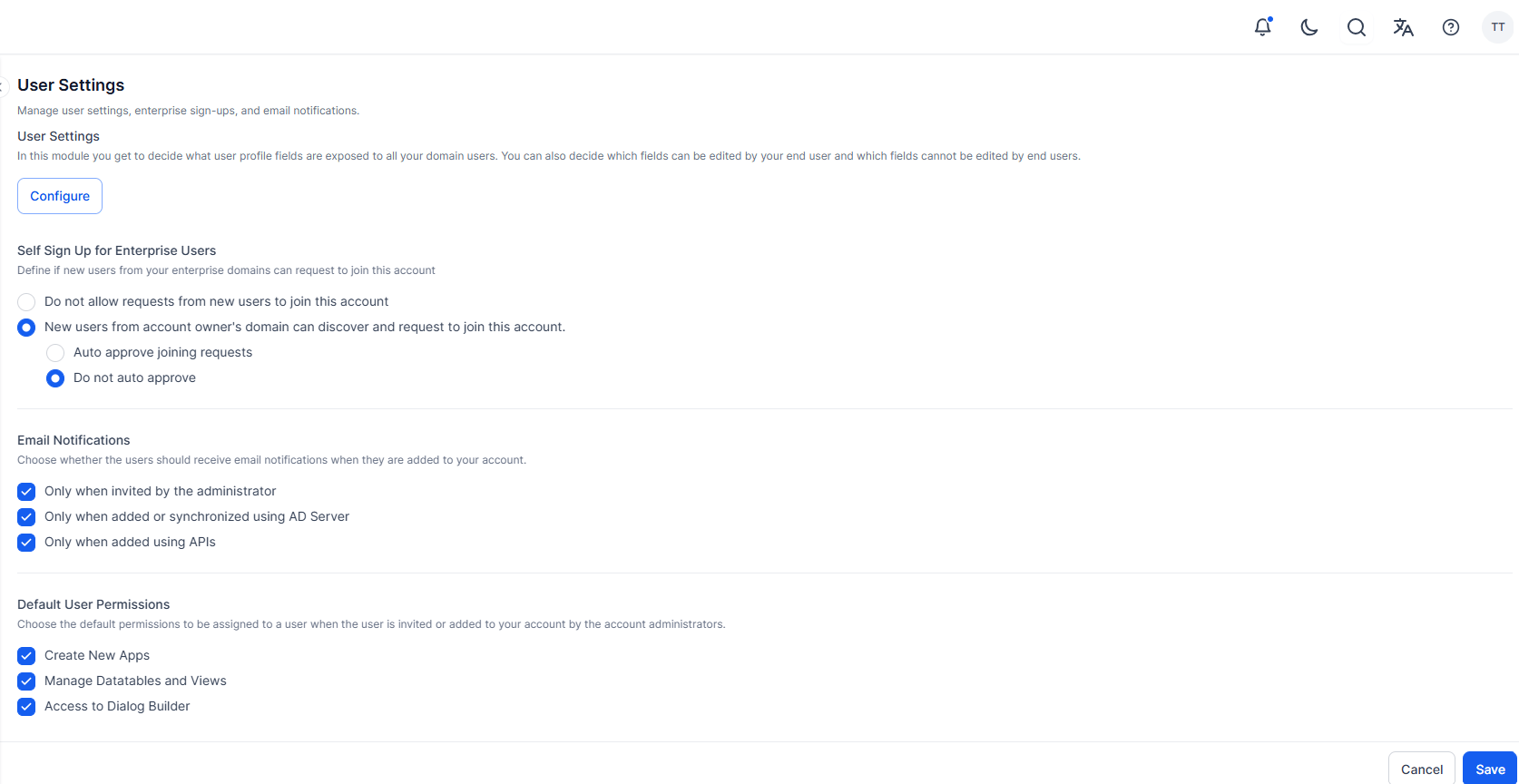
- From User Settings section, you can define the user profile fields displayed to the user in their profile, such as address information, and whether the user can edit those fields.
Users
You can manage users in your enterprise network from the Admin Console in the User Management > Users section.
Clicking on a specific User row from the Users page opens the User Details page. On the page, modify User Profile, Sessions/Devices, and Manage Product Access.
Profile
You can modify the user profile information of a specific user in your account, for example, to update their address or title.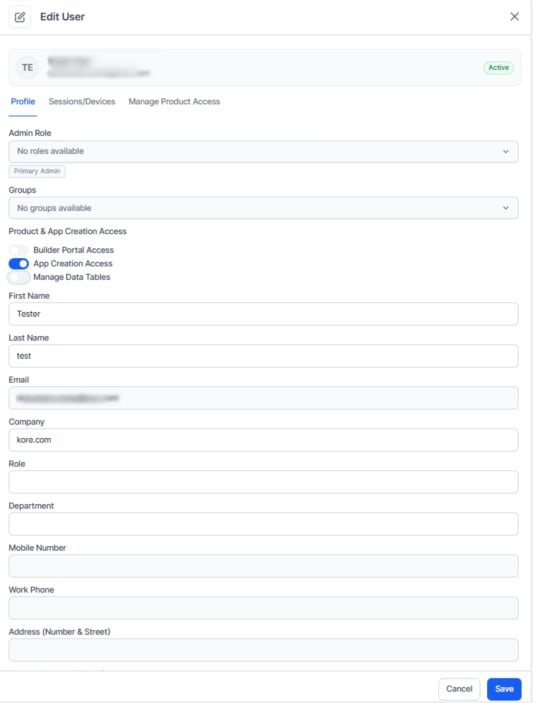
- Groups to which the user is assigned. From the dropdown, select the groups for the given User. Refer here for more on Managing Groups.
- Admin Role status can be updated from the drop-down.
- Product & App Creation Access — Turn on the required toggles for Builder Portal Access, App Creation Access, and Manage Data Tables.
- User Details like First Name, Last Name, email ID, etc., can be viewed and modified.
The email ID is a read-only field and can’t be modified.
Sessions and Devices
This tab displays the User activity – the session ID, the device type the user used, and their last activity timestamp on that session. You can use the Kill Session button to end a mobile or desktop session for the user.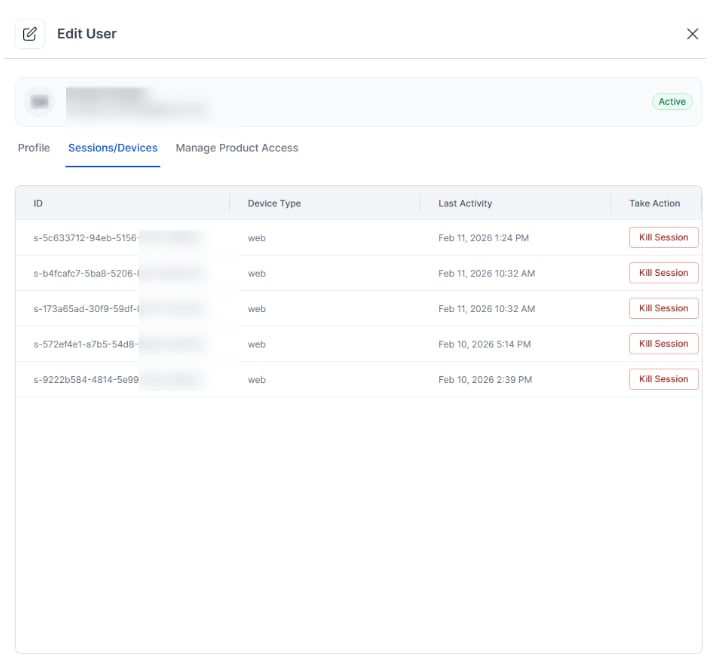
Cross-Workspace Session Management
The platform manages user sessions at the platform level rather than the workspace level. When users log in, a single session is created that works across all workspaces. This enables administrators to monitor active sessions for their users across all workspaces and terminate any user session, regardless of workspace.Security and Privacy Considerations
- Privacy: Users should be aware that their sessions in one workspace might be visible to administrators of other workspaces they’re part of.
- Enhanced Security: Cross-workspace monitoring helps detect suspicious activities.
- Session Management: Users may be logged out if an administrator from any workspace terminates their session.
Best Practices
For Administrators:- Utilize the session management feature responsibly.
- Notify users before terminating sessions, especially those in other workspaces.
- Regularly review active sessions to ensure proper account usage.
- Be aware that your sessions are visible across multiple workspaces.
- Log out of inactive sessions to maintain good security practices.
- Report suspicious session activity to the workspace administrator.
Manage Product Access
This tab displays the Apps to which the User has access and their role – Owner, Developer, or Tester. As an admin, you may edit or delete the role of the User for a given App. Note that you can’t delete or modify the role of an App Owner; it’s assigned at the time of App creation. You can also select an App and assign an App role to the user. For more information, see App roles.Other Options
You can also edit user details, reset user’s password, or delete a user.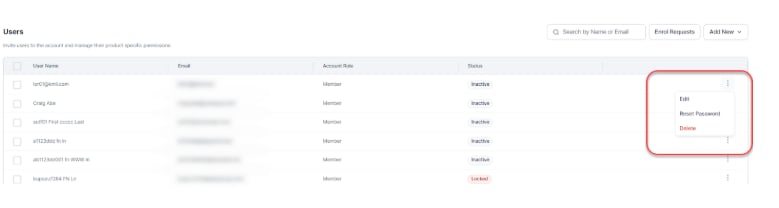
Reset a User Password
As an Admin, you can send a password reset email to any user, including yourself, from the Admin Console if Single Sign-On (SSO) isn’t enabled. The password reset email sent message is displayed, and an email is sent to the user with instructions about how to reset the password. When SSO is enabled, password policies aren’t in effect for Admins or Kore.ai users; the SSO service provider handles the password policies.
Delete User
As an Admin, you can delete a User using the More icon on the Users page. You can also Delete a User from the Users page by selecting a user and clicking the Delete Selected link. You can’t delete the Users if they’re owners of the App. You must change the respective app ownership to someone else to delete the user.
User Settings
Use the User Settings page to manage how users join your account, receive notifications, and get default permissions.Self Sign-Up for Enterprise Users
Define whether new users from your enterprise domain can discover and request to join the account. You can choose to:- Block requests from new users.
- Allow discovery and requests from users in the account owner’s domain.
- Auto approve joining requests.
- Do not auto approve
Email Notifications
Choose when users should receive email notifications after being added to your account:- Only when invited by the administrator.
- When added or synchronized using AD Server.
- When added using APIs.
Default User Permissions
Specify the default permissions assigned to new users:- Create New Apps.
- Manage Datatables and Views.
- Access Dialog Builder.